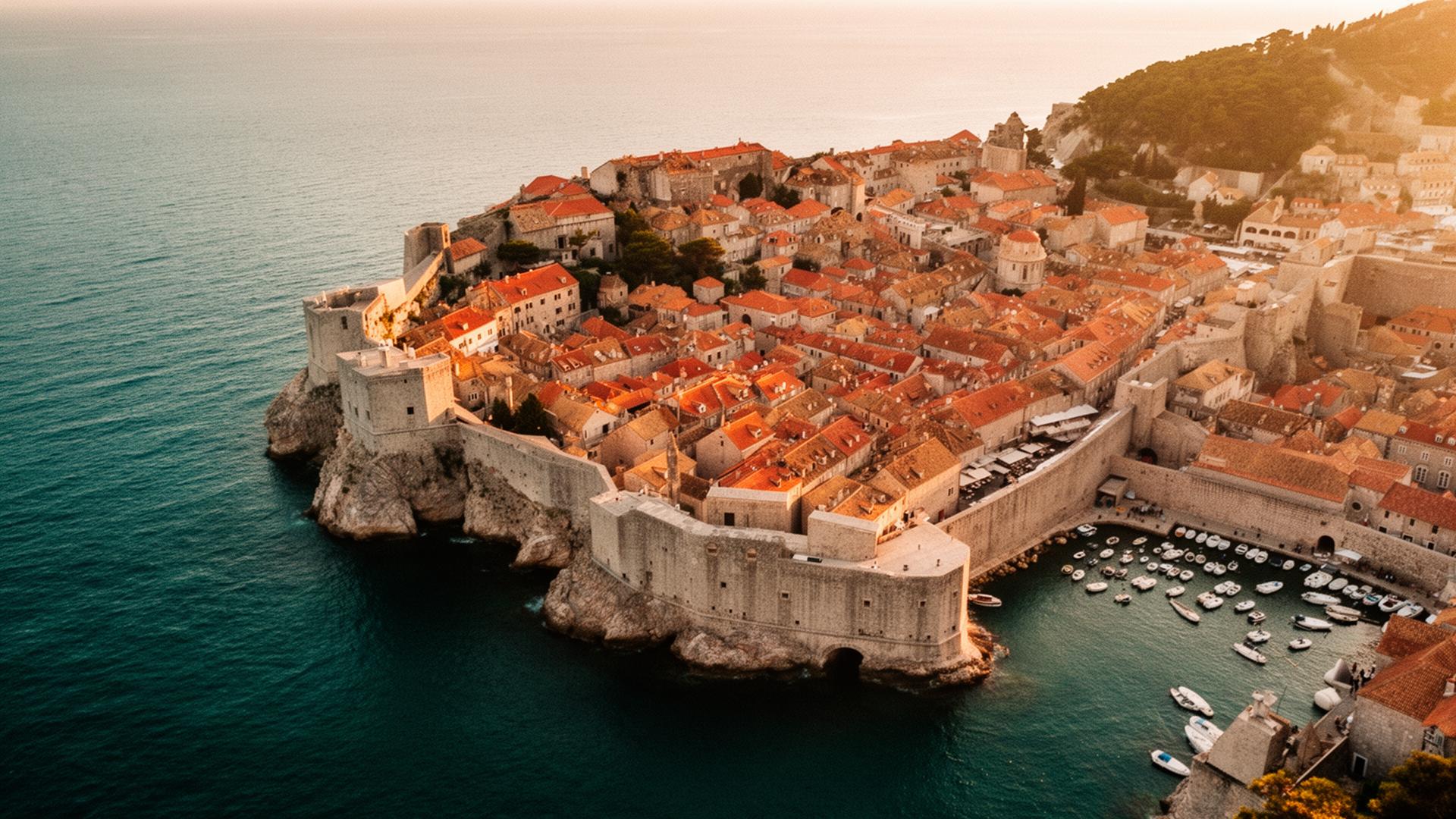
A konoba was originally the stone-walled cellar dug into the bedrock under a Dalmatian house, cool year-round, dark, the place wine fermented in chestnut barrels and prosciutto hung from oak beams for two winters before it was sliced. Today the word covers any small, family-run restaurant serving the food that has been cooked along the eastern Adriatic for a thousand years: slow, salty, smoke-touched, deeply seasonal, and almost always better the further you walk from the harbour.
This is a guide for travellers who want to eat the real Dalmatia, not the laminated-menu version that lives one block from every cruise pier. It is also a guide for cooks, because half the joy of Dalmatian food is understanding why it tastes the way it does: limestone soil, bora wind, salt fish, Venetian trade routes, Ottoman pantry, Austro-Hungarian café culture, and a coastline that turned every village into both a fisherman and a shepherd.
How to Recognise a Real Konoba in 30 Seconds
Look at the menu. A real konoba has a short menu, usually one laminated A4 page plus a daily blackboard. If the menu is in seven languages with photographs of the food, walk on. If the waiter hands you a tablet, run.
Look at the wine list. A real konoba pours house wine (vino kuće) from an unlabelled bottle, charges €2.50 for a deci (a tenth of a litre) and €15 for a litre carafe. The wine will be made by the owner's cousin in a village 12 kilometres away. It will be honest, slightly cloudy, and exactly what the food wants.
Look at the kitchen. A real konoba has a wood-fired hearth (komin) visible from the dining room, and an old man tending it who is either the owner's father or the owner himself in twenty years.
The Seven Dishes You Must Order in Dalmatia
1. Peka. Meat (lamb, veal, octopus or chicken) and potatoes baked for three hours under a bell-shaped iron lid called a sač, buried in glowing coals. You must order it 4 to 24 hours in advance. The flesh falls off the bone, the potatoes drink the fat, the kitchen smells like a Sunday in 1962. If a konoba serves 'peka' without notice, it is reheated stew. Skip it.
2. Pašticada. Beef topside marinated in red wine and prošek for two days, larded with bacon and garlic, then braised for five hours with prunes, carrots, nutmeg and cloves. Served with handmade gnocchi (njoki) to absorb the dark sauce. The Sunday dish of Split. Order it at Konoba Matejuška, Konoba Marjan or any restaurant where a grandmother is visibly in the kitchen.
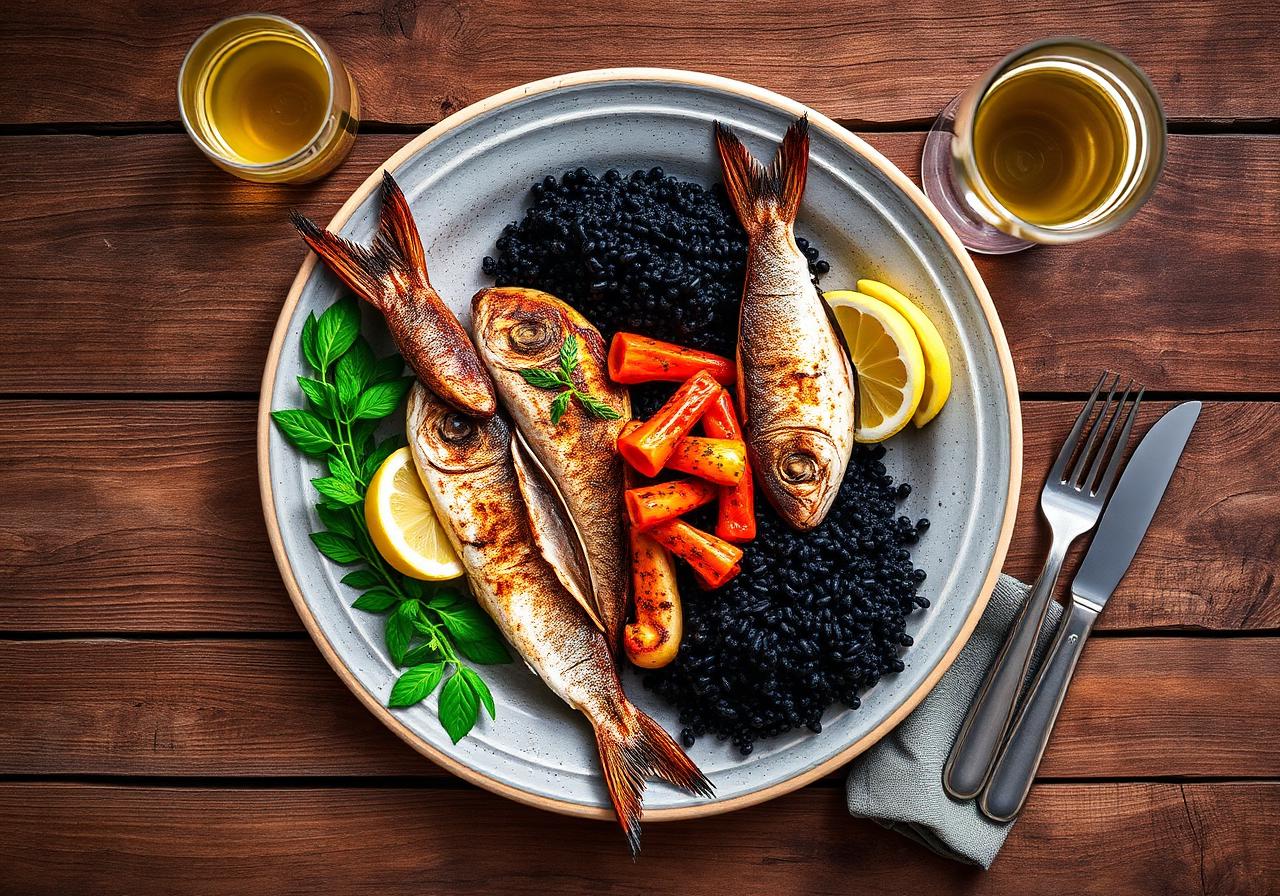
3. Crni rižot. Black risotto, coloured with cuttlefish ink, studded with rings of squid and cubes of monkfish, finished with a swirl of olive oil and a squeeze of lemon. Eaten with a spoon, never apologised for, always staining your teeth.
4. Brodet (or brujet). Fisherman's stew of three or four kinds of fish, usually scorpionfish, monkfish, conger eel and small rockfish, simmered with onion, white wine, tomato and rosemary. Served with creamy polenta on the side. Every fishing village along the coast claims the only true recipe. They are all correct.
5. Pršut and paški sir. Air-cured ham from the Pelješac peninsula, hung in stone smokehouses where the bora wind does the curing for ten months, and sheep's cheese from the windswept island of Pag, where the grass tastes faintly of salt and the cheese tastes of everything the sheep ate. Eat them together, on a wooden board, with a glass of pošip.
6. Soparnik. The Poljica peninsula's contribution to world cuisine, a paper-thin Swiss-chard pie, the size of a manhole cover, baked between hot stones and brushed with garlic-and-olive-oil dressing. UNESCO-protected. Greasy, herbal, addictive.
7. Rožata. The Dalmatian crème caramel, perfumed with rose liqueur (rozalin), set the night before, served cold in a thin pool of caramel. The right dessert to follow anything else on this list.
Eat what the sea brought in that morning. Ask what is good. An honest konoba will tell you what isn't, and then tell you what to order instead.
Where to Eat: A Konoba Atlas from Istria to Konavle
Istria. Konoba Morgan in Brtonigla for game and truffles; Konoba Buščina near Umag for hand-rolled fuži with wild asparagus; Konoba Astarea in Brist for the best octopus salad on the western coast.
Zadar and the islands. Foša in Zadar for fish straight off the boat at the city's tiny working harbour; Konoba Skoblar on Pag for paški sir aged 18 months; Roko on Dugi otok for lamb peka in a village of nine houses.
Split and surroundings. Konoba Matejuška in the old fishermen's quarter of Veli Varoš for pašticada and brodet that taste like someone's grandmother is still in the kitchen (she is); Villa Spiza in the centre for a five-table no-menu lunch the chef decides at the morning market; Konoba Trta in Solin for veal peka if you have a car.
Hvar. Konoba Menego in Hvar town for traditional small plates served on hand-thrown ceramics; Eremitaž in Stari Grad for handmade pasta with island lamb ragù; Stori Komin in Vrisnik (inland, requires a scooter) for the most honest peka on the island.
Korčula. Filippi in Korčula town for octopus salad that tastes like it was caught at the table (it sometimes was); Konoba Mate in Pupnat for makaruni (hand-rolled twisted pasta) with goat ragù.
Dubrovnik area. Konoba Dubrava in Bosanka above the city; Konoba Konavoski Dvori in the Konavle valley for river trout grilled over grapevine cuttings; Bugenvila in Cavtat for modern Dalmatian without the Dubrovnik markup.
What to Drink: A One-Page Wine Map
Dalmatia makes some of the most distinctive and least-exported wine in Europe. Skip imported anything.
Whites. Pošip from Korčula, mineral, citrus, ages beautifully, perfect with white fish and shellfish. Grk from Lumbarda on the same island, only grown on a single sand-soil plain, dry, almost saline. Malvazija from Istria, herbaceous, golden, the workhorse white of the northern Adriatic. Debit from Šibenik, light, lemony, the natural partner for raw oysters from Ston.
Reds. Plavac mali from the Pelješac peninsula, especially the Dingač and Postup vineyards on the south slopes where the vines grow at 45-degree angles above the sea, structured, dark-fruited, the Croatian cousin of Zinfandel. Babić from Primošten, medium-bodied, smoky, drink with grilled lamb.
Dessert and digestif. Prošek (sweet straw wine made from dried grapes, not to be confused with Italian prosecco), travarica (herbal grappa infused with sage and rosemary), and orahovac (a green-walnut digestif drunk after every Sunday lunch in Konavle).
Three Rules That Will Make Every Meal Better
Eat lunch at 13:00 and dinner at 21:00. Restaurants kitchens are at their best when the locals show up; show up with them.
Ask the waiter what is fresh today, then order that. Most Dalmatian fish is priced per kilo and weighed at the table, €60-€80 per kilo is normal for line-caught white fish, and a 600g sea bass easily feeds two.
Leave the harbour. The best meals on the Croatian coast are almost never on the waterfront. Walk ten minutes inland, climb the hill, take the local bus to the next village. The view will be worse. The food will be better. The bill will be half.